Posted 29 Sep 2026
Understanding Dyslexia at Work: My 32 Year Journey
Author Bio
This article is written by Jacqui Wallis. Jacqui is Director of Growth at Genius Within. With more than 26 years of business experience, she has held senior leadership roles across start-ups and global organisations, specialising in business development, growth strategy and implementation. Today she writes about dyslexia at work and the many things she has learned over the span of her career.
Discovering I Was Dyslexic
I didn’t know I was dyslexic until I went to university.
Looking back, there were probably plenty of clues before then, but like many women of my generation, I had simply found ways to get by. I worked hard, developed my own strategies and, where something didn’t come naturally, I generally assumed I just needed to try harder.
So getting a dyslexia diagnosis at university brought a mixture of emotions.
There was some relief. Suddenly, there was an explanation for why certain things had always seemed to require more effort. But there was also a lot to process. At the time, I didn’t really know what being dyslexic would mean for my future career, or how much of an impact it would have once I started working.
That was a long time ago.
I’ve now had a 32-year career, and my understanding of dyslexia (and of myself) has changed considerably during that time.
How I Feel About Dyslexia Now
These days, dyslexia is simply part of how my brain works.
There are things I find harder. Literacy has always been one of the more obvious connections for me. Reading, writing and proofreading can require more effort, and that became particularly apparent as the workplace changed.
When I started my career in advertising, we didn’t all sit at computers sending emails all day. Many of my briefs arrived via the fax machine.
As email became a much bigger part of working life, there was a point when I suddenly realised that it was taking me significantly longer to write emails than it seemed to take my colleagues.
Until then, I genuinely thought emails just took everyone a really long time to write.
That was quite an important realisation for me.
It showed me that sometimes you don’t know that something is harder for you because you have no comparison. You just assume everyone else is experiencing the same thing.
Over the years, my understanding has become much more nuanced too.
When I was first diagnosed, I understood the fairly straight-line connections with dyslexia: literacy, reading, spelling and writing.
What I didn’t initially understand were some of the less obvious areas that could be part of my own profile.
Things such as self-organisation and time management could be challenging. Later, I also discovered that I was dyspraxic, and that helped me understand other things about myself, including my sense of myself in space, much more fully.
Like many people, I didn’t fit neatly into a single diagnostic box.
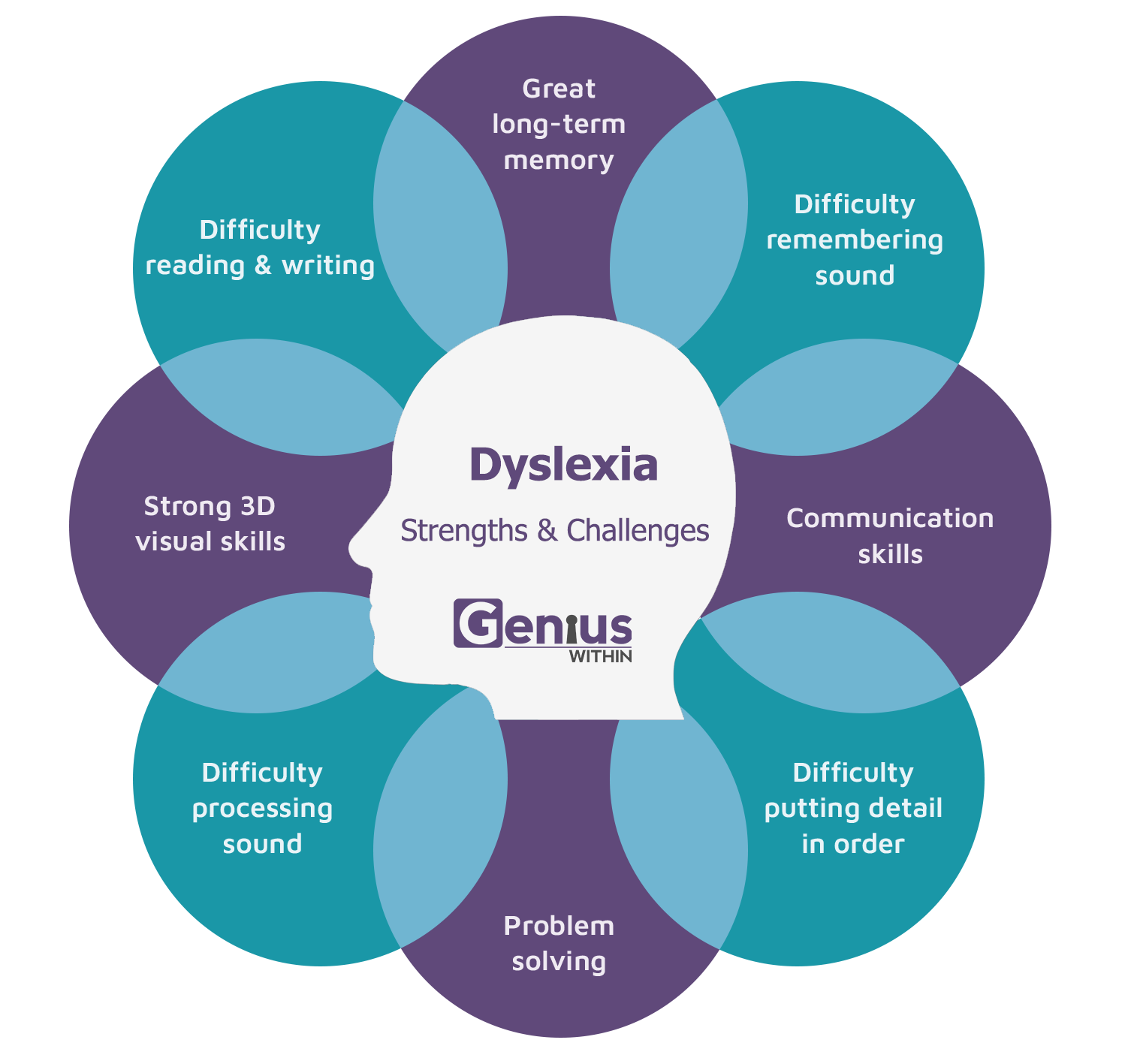
Understanding the nuance of both dyslexia and dyspraxia helped me to understand my own spiky profile — the areas where I am very strong sitting alongside areas that require considerably more conscious effort.
That understanding has probably been one of the most valuable things.
My Advice to Other Dyslexic People at Work
My biggest piece of advice is to understand your own profile (how your brain works) and become comfortable advocating for what helps you to work well.
That isn’t always easy.
Particularly early in your career, you may have spent years developing ways to hide the things you find difficult. You may worry that explaining a challenge will cause somebody to question your capability.
But knowing how you work is not a weakness.
For me, self-advocacy has become much less about saying, “I’m dyslexic, therefore I need X,” and much more about understanding the specific tasks that create friction and identifying practical ways of making them work better.
That might mean using assistive technology, text-to-speech or dictation. It might mean changing how information is presented, breaking a complex task into clearer stages, or finding a different way to organise and prioritise work.
And those strategies need to be individual.
Two dyslexic people may have completely different strengths and challenges.
That is why I think self-understanding has to come before self-advocacy.
What I Wish Non-Dyslexic People Understood
Probably the biggest thing is that intelligence and literacy are not the same thing.
Someone can be extremely capable, experienced and knowledgeable and still miss a spelling mistake.
They can understand a complicated business problem and find it difficult to turn their thoughts immediately into a perfectly structured piece of writing.
They can be highly successful and still find some everyday workplace tasks disproportionately tiring.
And sometimes the challenges are not the ones people immediately associate with dyslexia.
That is the danger of assuming that a diagnosis tells you everything you need to know about somebody.
We all have a profile of strengths and challenges. For neurodivergent people, that profile can sometimes be particularly uneven (what is often described as a spiky profile).
Understanding that profile is far more useful than relying on stereotypes about what a dyslexic person can or cannot do.
It is also why I am wary of describing dyslexia simply as a “superpower”.
There are absolutely strengths that I associate with the way I think. But there are also things that are genuinely challenging.
Both can be true.
One Thing I Would Ask Managers to do
Discuss it with me.
Don’t assume you know what I need because I have told you I am dyslexic.
If I were having that conversation with a manager today, I would bring my Workplace Passport from the Genius Finder platform.
That is very different from the position I was in when I was diagnosed at university.
Back then, I knew dyslexia could affect my literacy. What I didn’t have was a way of joining up all the other elements of how I work.
That is one of the reasons I am so passionate about what we do at Genius Within, and particularly proud that we built Genius Finder Pro.
Using the platform helped me connect with the skill areas where I am strong. I think as a neurodivergent person, many of us need a bit of help recognising and articulating our strengths.
But it also mapped the areas where I experience more challenge and, crucially, connected those challenges to practical, realistic strategies I could actually use.
That is what I would want a manager to understand.
The conversation shouldn’t begin and end with the word “dyslexia”.
It should be: How do you work? Where are your strengths? Which parts of your job create unnecessary friction? What strategies help? And is there anything we can change in the way the work is designed or communicated that would enable you to perform at your best?
A Workplace Passport gives you a much richer starting point for that conversation.
After 32 years in the workplace, I don’t think success for a dyslexic employee should depend on becoming exceptionally good at disguising the fact that they are dyslexic.
For me, the biggest difference has come from understanding my own brain more fully — not only the things I find difficult, but the things I do particularly well.
And perhaps that is the message I would most like to share during Dyslexia Awareness Week.
Understanding dyslexia should not only be about identifying difficulties.
It should be about understanding the whole person.
To learn more about Dyslexia click here.