
Posted 13 Oct 2026
Dyspraxia at Work: Exploring Strengths and Finding the Right Reasonable Adjustments
Author Bio
This article is written by Genius Within Community Manager Helen Doyle. Helen is a subject matter specialist writing about neurodiversity and disability inclusion both from the perspective of her own lived experience and collaborating with the experts on our team to cover a wide variety of topics and views. Today she writes about Dyspraxia Awareness with some suggestions for reasonable adjustments that might help.
Let’s Talk about Dyspraxia at Work
For Dyspraxia Awareness Month, we’re looking at what can make working life easier for people with dyspraxia, from finding reasonable adjustments that actually work to recognising and making the most of individual strengths.
Dyspraxia, sometimes known as Developmental Coordination Disorder (DCD), is a neurodevelopmental condition that primarily affects movement and coordination. It can also affect things like organisation, planning, time management and working memory, although everyone’s experience is different.
When we talk about dyspraxia at work, it’s easy to focus on the things that might be difficult. But that’s only part of the picture. Understanding someone’s strengths and finding ways for them to use those strengths is just as important as removing barriers.
And, of course, there’s no one-size-fits-all approach. The aim is to understand how each person works best, what gets in their way and what might help.
What are The Best Reasonable Adjustments For Dyspraxia at Work?
The best reasonable adjustments are the ones that actually work for the individual.
Finding them can be as simple as having an open conversation and working through a problem collaboratively. Sometimes, specialist workplace coaching can help. Tools like our Genius Finder platform can also be useful, helping people explore their individual cognitive profile and identify strategies and adjustments that might make everyday tasks easier.
There’s no single set of adjustments that will suit everyone, but here are some ideas worth exploring.
Use Diaries, Reminders and Organisational Tools
Keeping track of deadlines, appointments and competing priorities can be tricky, particularly when there’s a lot going on at once.
Digital diaries, calendar reminders, task management apps and written to-do lists can all help with organisation and time management.
Clear written instructions, realistic deadlines and meeting summaries can also take some of the pressure off trying to remember and organise everything.
These might sound like obvious solutions, but the important bit is finding what actually works for you. One person’s perfectly organised spreadsheet is another person’s nightmare! It’s worth experimenting with different tools and approaches rather than assuming there’s one right way to stay organised.
Make Use of Workplace Coaching and Peer Mentoring
Sometimes, having someone to talk through a challenge with can make all the difference.
Specialist workplace coaching can help people explore their strengths, understand what’s getting in the way and develop practical strategies that work for them.
Peer mentoring can be valuable too. Sharing experiences, swapping ideas and learning what’s worked for others can help us find new ways of approaching familiar challenges.
It’s not about learning to work like everybody else. It’s about finding ways of working that suit the individual.
Think About Physical Comfort and Coordination
Dyspraxia can affect balance, coordination and the physical effort involved in everyday tasks. This might make some aspects of work more tiring or uncomfortable.
Small changes, such as suitable equipment, movement breaks or adapting tasks that involve fine motor skills, can make a real difference.
Some people also find that exercise focused on strength, balance or coordination is helpful. That’s a personal choice though, and shouldn’t replace workplace adjustments that remove unnecessary physical barriers.
Reduce Unnecessary Stress and Anxiety
Of course, we’d all like a little less stress!
But it’s worth remembering that working in an environment that doesn’t suit your needs can create an extra layer of pressure. Having to constantly find workarounds, keep up with systems that don’t suit you or put extra effort into tasks others take for granted can be exhausting.
That’s exactly why reasonable adjustments matter.
Flexible working, quiet spaces, regular breaks and manageable deadlines can all help reduce unnecessary pressure.
Relaxation techniques, such as grounding or breathing exercises, might also be useful for some people. But the priority should always be looking at what’s causing the stress and whether something in the working environment could change.
And perhaps most importantly, people need to feel comfortable asking for support or suggesting a different way of doing things without worrying about how that will be received.

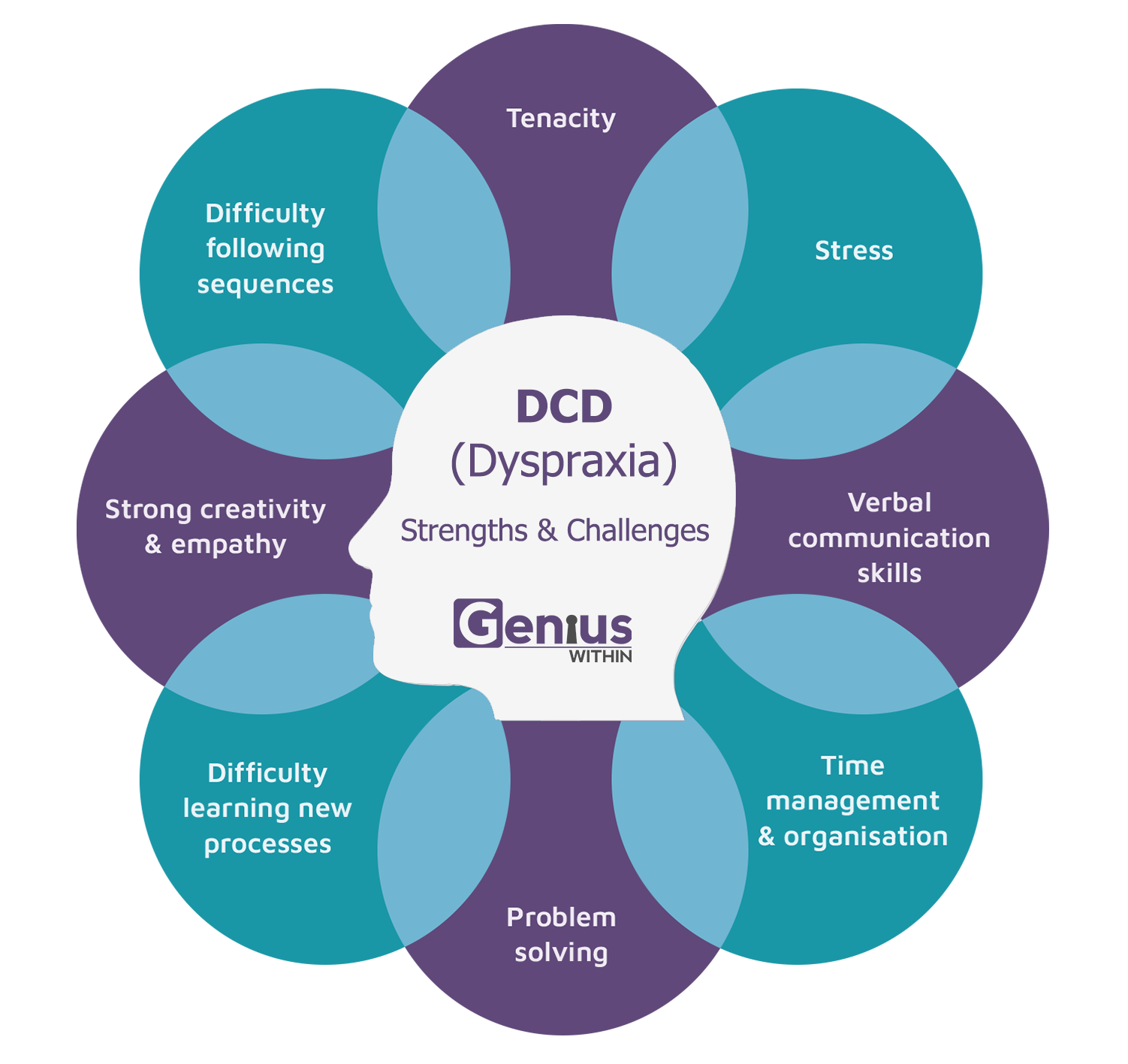
Exploring Dyspraxic Strengths
We hear plenty about the challenges associated with dyspraxia, but what about the strengths?
You might have heard us talk about the idea of a spiky profile. This describes how someone’s abilities can vary significantly across different areas and it’s a pattern often discussed in relation to neurodivergence.
There are several strengths that have been shown to be commonly associated with dyspraxia, although they certainly won’t apply to everyone and shouldn’t be used to make assumptions about people.
The top five are:
- Creativity
- Entrepreneurial thinking
- Good memory for facts
- Thinking outside the box
- Logical problem-solving
Of course, being dyspraxic doesn’t automatically mean you’ll have these strengths.
The point is to get curious about what people are good at and how that can help provide balance to areas of difficulty, instead of focusing solely on perceived negatives.
How Can We Make Workplaces Better for Dyspraxic People?
A good place to start is simply asking: What’s working well for you, what’s getting in the way and what could we do differently?
In Great Britain, the Equality Act 2010 requires employers to make reasonable adjustments for disabled employees where the legal duty applies. But creating a genuinely neuroinclusive workplace is about more than meeting the basic legal requirements.
It’s about being open to different ways of working, making adjustments without unnecessary barriers and recognising that everyone brings their own combination of strengths and support needs.
This Dyspraxia Awareness Month, let’s move beyond simply knowing what dyspraxia is and think about what we can do to make work better.
Because when we create workplaces where people can work in ways that suit them and make the most of their strengths, everyone benefits.
At Genius Within, we help people and organisations find practical ways to make work more neuroinclusive through specialist workplace coaching, workplace needs assessments and neurodiversity training. We can help you identify barriers, explore individual strengths and find adjustments that genuinely make a difference.
To learn more about dyspraxia click here.
To read our interview with dypraxic author and public speak Rosemary Richings, click here.