
Posted 06 Aug 2026
“Naughty” Neurodivergent Children Often Discover Their True Skills Once They Start Work
Author Bio
This article is written by Genius Within Community Manager Helen Doyle. Helen is a subject matter specialist writing about neurodiversity and disability inclusion both from the perspective of her own lived experience and collaborating with the experts on our team to cover a wide variety of topics and views.

Making Compliance the Goal
Recently, there has been renewed media attention on the idea that gentle/respectful parenting approaches are creating children who are unprepared for real life. But this argument misses something important: many so-called “naughty” children are neurodivergent children whose needs and actions have been misunderstood. When we make compliance the only goal because difference is inconvenient, we are doing these neurodivergent children a huge disservice.
For adults who are Autistic, ADHD, dyslexic, or any other neurotype that falls under the neurodivergent umbrella, these debates can feel deeply personal. Many of us remember being described as “too chatty”, “too hectic”, “too sensitive”, “too distracted” or “not paying attention”. Those labels often followed us through school, shaping how teachers, relatives and even peers understood our behaviour.
From Classroom Criticism to Adult Self-Doubt
When a child is constantly corrected for the way their brain naturally works, it can have a long-term impact on confidence and self-esteem. A child who fidgets may learn that their energy is a problem. A kid who speaks often may learn that their enthusiasm is irritating. A young person who daydreams may be told they are lazy, even when their mind is busy imagining, designing or problem-solving.
This matters because the language used around neurodivergent children often becomes the language they use about themselves. Instead of seeing curiosity, energy, sensitivity or creative thinking as strengths, they may grow up believing they are difficult, disruptive or less capable. Reframing those traits is not about ignoring behaviour or removing boundaries. It is about asking a more useful question: what is this behaviour communicating, and where might this trait become an advantage?
Research has shown that self-efficacy is valuable to the workplace and should not be overlooked.

Why the Workplace can Change the Story
The transition from education to work can reveal how limited some school-based judgements were. Traditional classrooms often reward compliance, sitting still, quiet concentration and predictable output. Modern workplaces, however, increasingly value innovation, creativity, adaptability, emotional intelligence and original thinking. The very qualities that made a child seem “inconvenient” in school may become valuable in the right role, team or environment.
If you were labelled too fidgety, you may have the energy and responsiveness suited to fast-paced work such as contracting, emergency services, sports coaching, events or hands-on technical roles. If you were “too chatty” you may thrive in teaching, sales, customer support, community work or leadership. If you were the classroom daydreamer, perhaps your mind was already rehearsing the skills of a writer, architect, designer, strategist or entrepreneur.
This freedom to engage with their work and succeed all whilst also being their true self can be transformative for self-esteem. The real question is why should anyone have to wait this long to be allowed to work in a way that feels comfortable and right for them?
Difference is not a Deficit
Neurodiversity in the workplace is not about pretending that challenges do not exist. Some people need adjustments, clearer communication, flexible working patterns, sensory-aware environments or support with executive function. But needing support does not erase talent. In fact, inclusive workplaces often benefit from the very thinking styles that traditional systems overlook: persistence, empathy, pattern recognition, lateral thinking, intense focus, creative problem-solving and the ability to spot what others miss.
That is why it is so important to challenge overly simplistic conversations about parenting and behaviour. Children do need guidance, consistency and care. But they also need adults who can tell the difference between intentional disrespect and unmet needs. They need teachers, parents and communities who are curious before they are critical.
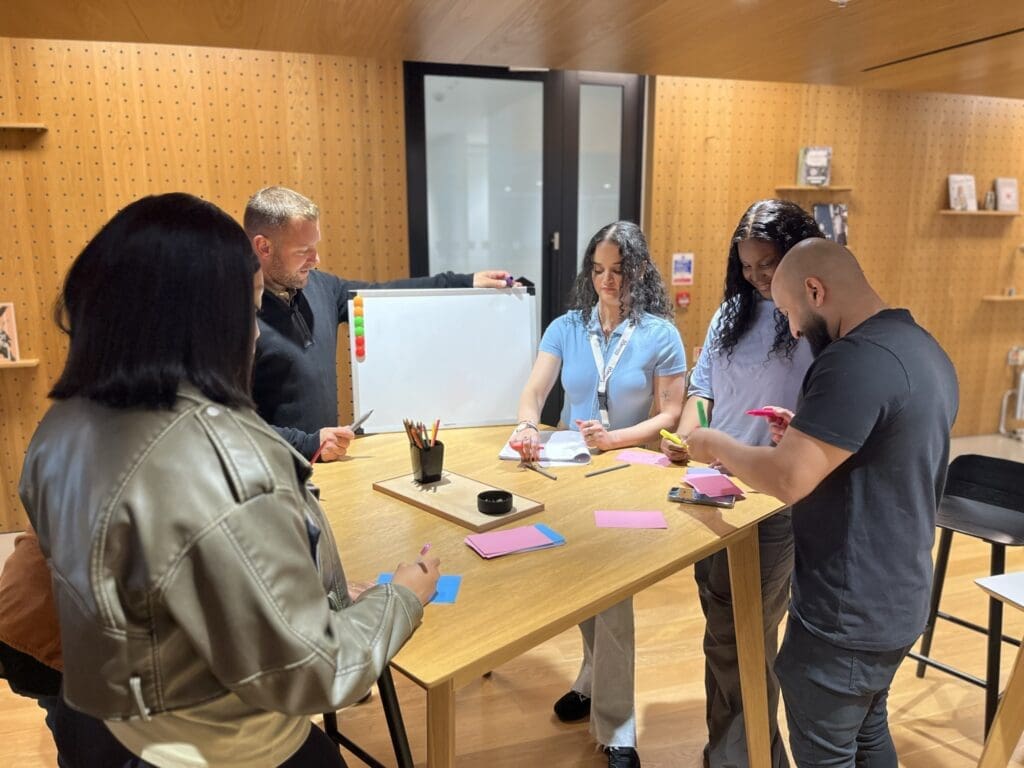
Neurodivergent Children Become Neurodivergent Adults
For many neurodivergent adults, entering the working world can be the first time their differences are recognised as useful. A different environment, the right role or a supportive manager can transform old shame into confidence. What a wonderful opportunity to heal and move on from those childhood criticisms.
Workplaces however are not free from judgement, miscommunications, or social hierarchy. It is with this in mind that we need to be careful not to fall back too easily into familiar patterns.
Have you ever assumed your colleagues non-stop questions are a challenge to your choices rather than a need for detail? Have you avoided working with someone because you don’t like the tone in their emails? Did you turn away a highly skilled applicant because they didn’t make eye contact?
If we want diversity of thought in our work environment then we need to apply benefit of the doubt, curiosity and open communication with all our colleagues when we experience moments like these. If we start creating arbitrary barriers and nonsensical social rules we run the risk of re-creating the classroom and losing out on valuable neurodivergent talent.
Click here to learn more about neurodiversity
Looking for ways to support your neurodivergent team? Click here to read about our coaching services