Posted 23 Jun 2026
Neurodiversity Coaching That Delivers Measurable Results
When organisations invest in workplace support, they want to know it works. Our latest Coaching Impact Review offers clear evidence that specialist neurodiversity coaching does indeed deliver meaningful, measurable results for both employees and employers.
Here at Genius Within, we have been collecting performance data before and after coaching to measure progress over time. This means we have been effectively researching neurodiversity coaching since 2011. What makes this review especially valuable is that it does not rely on opinion alone. It tracks workplace performance scores from both coaching clients and managers, helping to show whether the impact of coaching is not only felt by the individual, but also recognised by the people around them.
A Clear Improvement in Workplace Performance
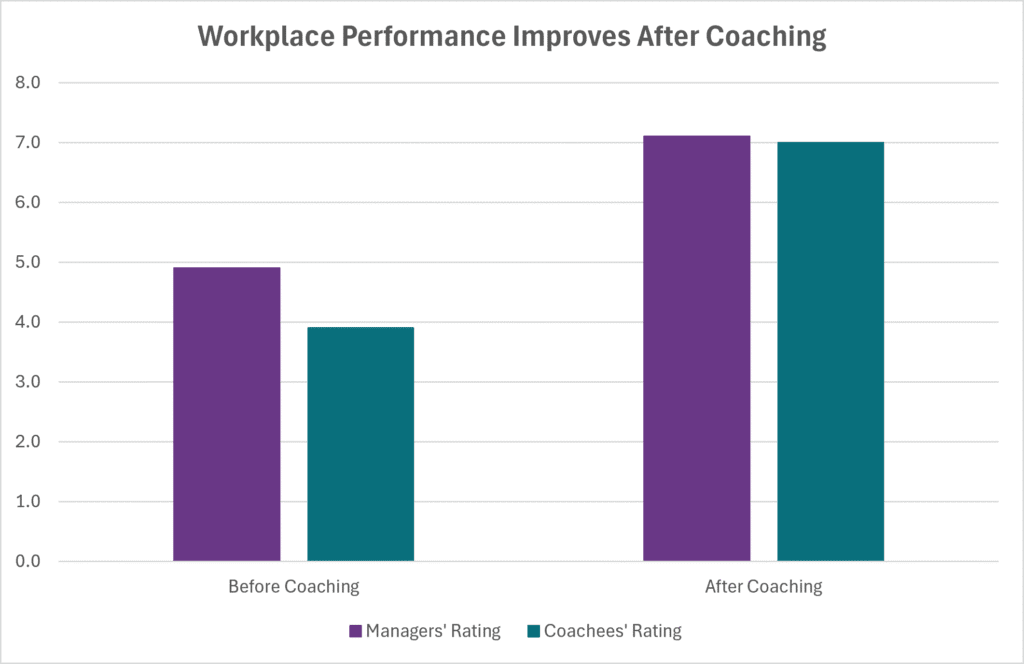
One of the strongest findings in the review is the change in performance scores before and after coaching.
Managers rated employee performance at an average of 4.9 out of 10 before coaching and 7.1 out of 10 after coaching. Coachees rated themselves at 3.9 out of 10 before coaching and 7.0 out of 10 after coaching.
These figures show a substantial improvement in perceived workplace performance from both perspectives. They also reveal something important about the lived experience of neurodivergent employees. Before coaching, coachees rated themselves lower than their managers did. According to the review, this may reflect low self-esteem and the hidden effort many neurodivergent people expend just to maintain baseline performance.
The review highlights average improvement scores of 44% and 79%, underlining the scale of change that coaching can produce across the support process.
Why These Results Matter
These findings matter because they move the conversation beyond good intentions. Employers are increasingly aware of the need for better neuro-inclusion, but many still ask the same question: what difference does the support actually make?
Our Impact Review provides a practical answer. Coaching is associated with stronger workplace performance, improved self-understanding and reduced stress through strategies that help people work more effectively in ways that fit their neurotype. The review also notes that the issues people seek help with are consistent across multiple neurotypes, including ADHD, autism, dyslexia and chronic illness, showing how widely relevant this support can be.
For employers, that makes neurodiversity coaching more than a wellbeing add-on. It becomes a targeted intervention with measurable outcomes.
A Stronger Model of Support
In our review we didn’t look at individual coaching outcomes alone. We also examined how support can be delivered more effectively and efficiently through a stepped approach.
At Genius we use the Genius Finder® a psychometrically designed personal development platform that signposts users to more than 400 recommendations for adjustments to environment, activity, everyday tools, and cognitive or emotional strategies. By introducing this widely as a first step, it allows people to access practical support earlier, rather than waiting for a formal diagnosis or a specialist workplace assessment before any help begins.
This contrasts with the more traditional “gatekeeping” approach, where support is often delayed until assessments are completed. Our findings from an HCML pilot study of 108 people suggest that this stepped model helps more individuals access the right support at a lower cost and in less time.
Lower Costs, Wider Access
We believe the financial case in this review is striking.
The average cost of specialist intervention per client was £780 under the gatekeeping model, compared with £309 under the stepped approach. The average occupational health referral cost per client, including those not referred, was £563 under gatekeeping and £163 under the stepped model.
Our review also found that 77% of individuals supported through occupational health case management received strategies through the occupational health service or the Genius Finder Pro™ screening tool. This significantly reduced the need for lengthy, expensive and sometimes stressful specialist assessments.
This is important because many neurodivergent employees do not need to wait for a full diagnostic process before they can benefit from support. When guidance, tools and coaching are available earlier, more people can get help when they need it.

Real Impact, Backed by Lived Experience
The statistics in the Impact Review are powerful because they are supported by client experience.
Sarah from Thales UK said:
“Nicole really changed the way that I viewed my AuDHD diagnosis. Our coaching sessions helped me to come to terms with my neurotype, to understand what this meant for me and how to use my abilities to boost my career.”
Tristan from The Ripple Project said:
“The coaching sessions allowed me to unlock different ways of thinking and gave me the time process experiences with an alternative frame of mind.”
An employee from The Rock Trust described coaching as “one of the best decisions I’ve ever made”, adding that the learning and reflections were “life-changing, both professionally and personally.”
These coaching testimonials add human depth to the review’s findings. The numbers show improvement. The testimonials show what that improvement feels like in practice.
Evidence that Coaching Works
At Genius we believe the Neurodiversity Coaching Impact Review makes a compelling case for the effectiveness of our unique approach. It shows measurable improvements in workplace performance, strong value for employers, and a support model that helps more people access the strategies they need.
For organisations looking to build a more neuroinclusive workplace, the message is clear. Effective neurodiversity support should be evidence-based, practical and accessible. At Genius Within our revolutionary coaching model offers all three.
To learn more about our coaching services click here.
We are committed to an evidence-based practice. To read more about our research click here.
Neurodiversity Coaching: 7 Tips for Success. Read our CEO’s article here.