Posted 09 Apr 2026
Autistic Strengths at Work: What Employers Often Miss
April is Autism Month so we decided to have a chat with Business Psychologist and our Occupational Team Leader Gunjan Odedra about the most common strengths that we see in our Autistic clients and how they can best be leveraged to help individuals thrive.
Now we should preface this of course by saying that no two Autistic people are the same and we should avoid making sweeping generalisations or expecting all Autistic people to behave in the same way.
The observations in this blog will be based on the data we have collected in our many years of coaching as well as the academic research of our Founder Dr Doyle and the Birkbeck Centre for Neurodiversity at Work. While these strengths are statistically more common, they should never be treated as universal expectations.
With that point made, let’s explore some of these strengths with Gunjan’s professional insight.
Creating and Finding Patterns
Many Autistic individuals have an ability to identify patterns, connections and inconsistencies that others may overlook. This can be particularly valuable in roles that involve problem solving, data analysis or systems thinking. Employers often miss how impactful this strength can be when it is not actively recognised or nurtured within the workplace.
Gunjan says:
“Pattern detection, connection-building, and inconsistency spotting is one of the most consistently supported strengths in autism research. It’s often described scientifically as “systemizing”: the drive and ability to identify rules, regularities, and “if–then” relationships in data or systems. In real-world settings, this can translate into valuable contributions across a wide range of roles. For example, in software testing or cybersecurity, perhaps detecting subtle bugs or irregular system behaviours that only appear under specific conditions. In finance, it could be identifying unusual transaction patterns that signal fraud. Even in creative fields, this ability supports recognising structure, symmetry, or inconsistencies in storytelling, design, or music.”

Encourage and Provide Time for Pattern-Based Thinking
“Typical hiring and management practices tend to reward quick answers rather than deep pattern analysis, prioritise verbal explanation over demonstrated insight, and rarely allow time for pattern exploration or system understanding meaning the ability exists, but the environment doesn’t support it.
Despite its value, this strength is often underutilised because traditional workplaces do not explicitly ask for or nurture pattern-based thinking. A simple but effective way to support this ability is to frame tasks around identifying anomalies such as asking “what doesn’t fit here?” “Look for anything unusual, inconsistent, or repeating in this system” and to provide dedicated time and access to detailed information. When given the right conditions, this pattern-recognition ability becomes not just a personal strength, but a significant asset to teams and organisations with improved system reliability.”
Honesty and Direct Communication
Direct and honest communication is another strength that can bring clarity and efficiency to teams. An Autistic person may be less likely to rely on implied meaning or office politics, instead favouring clear and transparent exchanges. While this can sometimes be misunderstood, it has the potential to build trust and reduce ambiguity when properly valued.
Gunjan says:
“In workplace settings, this can bring significant benefits: expectations are clarified more quickly, feedback is more precise, and misunderstandings can be reduced.
Research exploring the “double empathy problem” highlights that communication differences between autistic and non-autistic people are often mutual rather than one-sided, meaning that what is sometimes perceived as “too direct” may instead reflect a different but equally valid approach. For example, in a project team, an autistic employee might clearly state that a deadline is unrealistic based on the current workload, allowing the team to adjust plans early rather than encountering problems later. In a quality assurance role, they may give straightforward feedback that a product is not meeting required standards, helping prevent costly errors from progressing further. In meetings, they might ask direct clarifying questions such as “What exactly does success look like here?” which can surface assumptions that others have not voiced.”
Reframe Bluntness as Helpful and Honest
“At the same time, this strength can be a double-edged sword. In environments that rely heavily on indirect communication, unwritten rules, or diplomatic phrasing, directness may be misinterpreted as bluntness or lack of tact.
For instance, giving immediate, candid feedback without softening language may be perceived as criticism, even when the intention is to improve outcomes. This can create friction, not because the communication is ineffective, but because it does not align with expected social norms. However, when organisations actively embrace direct communication by encouraging clarity, reducing reliance on hidden expectations, and valuing substance over style this trait can significantly enhance psychological safety.
Teams benefit from more open conversations, feedback, and fewer unspoken assumptions. In this way, what is sometimes seen as a disadvantage can become a powerful driver of transparency, trust, and more effective communication for everyone.”

Detail Conscious
Attention to detail is frequently highlighted as a key strength for Autistic people and can become a bit of a stereotype, but for those individuals for whom it is true, it can be a real advantage at work. In fast paced or chaotic environments, this strength can be particularly beneficial, though it is not always given the recognition it deserves.
Gunjan says:
“Rather than relying on broad assumptions or “big picture” shortcuts, this style of processing allows for careful, precise, and methodical work, which can be highly valuable in roles where accuracy is critical. However, as with many strengths, context matters. In fast-paced environments that prioritise speed over accuracy, or where instructions are vague, this attention to detail may be misunderstood as over-focus or inefficiency.
Additionally, if the broader purpose of a task is not clearly explained, there can be tension between maintaining precision and meeting shifting expectations. This reflects a wider theme in the research: the strength itself is not the issue, but how well the environment allows it to be used effectively.
To support and nurture detail-consciousness, simple adjustments such as asking “Can you review this for anything we might have missed?” or assigning roles focused on checking, validating, or refining work can add significant value.”
Create Space for Focus Time
“When viewed through a strengths-based lens, using the Genius Finder™ for example, we can see that individuals who thrive here may not necessarily be the ones generating rapid ideas, but they are often the ones who ensure that ideas are accurate, workable, and sustainable. This strength can become diluted in busy or distracting environments where constant interruptions or competing demands make sustained focus difficult.
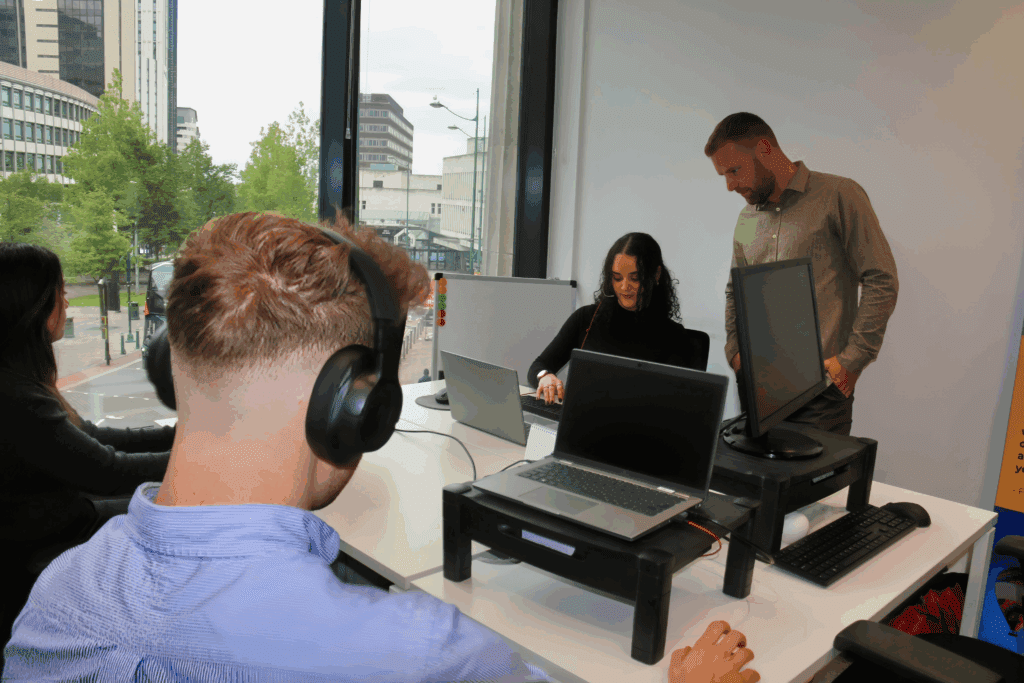
A practical way to support this is to create “protected focus time,” where individuals can engage deeply with detail-oriented tasks without disruption. Strategies such as using noise-cancelling headphones, working in quieter spaces, batching similar tasks together, or clearly prioritising what level of detail is required can make a significant difference.
When individuals are able to apply their attention to detail in the right conditions, it not only enhances their own performance but also raises the overall standard and reliability of work across the team.
This makes them essential to team effectiveness, particularly in roles related to quality assurance, compliance, data accuracy, research, and operational consistency.”
Tenacity and a Commitment to Fairness
A strong sense of fairness and persistence can drive an Autistic person to follow through on difficult tasks and advocate for what is right. This tenacity can be a powerful asset in maintaining standards, ensuring accountability and supporting ethical decision making.
Gunjan says:
“Many autistic individuals demonstrate persistence when working toward a goal, particularly when the task aligns with their values or sense of what is “right.” This can be understood through research on cognitive style and motivation, which suggests that they may be less influenced by social pressure or short-term rewards, and more guided by internal rules, principles, or a clear sense of logic.
As a result, once they engage with a task or issue, they are often highly committed to seeing it through, even when it is complex or challenging. For example, in compliance or auditing roles, they may persist in investigating discrepancies until they are fully resolved, rather than accepting partial explanations. In safeguarding, healthcare, or education contexts, they may advocate consistently for fair treatment or correct procedures, even when this is uncomfortable or goes against group consensus.”
Communicate Values Clearly and Be Transparent
“Alongside this, a strong sense of fairness can contribute to ethical decision-making and accountability. This can help teams avoid biased or inconsistent decisions, as actions are more likely to be evaluated against clear principles rather than unwritten social dynamics. However, as with other strengths, context matters.
In environments where flexibility, rapid compromise, or informal decision-making are prioritised, persistence may be misinterpreted as rigidity, and a strong stance on fairness may be seen as challenging authority. Without the right support, this can create tension. Yet when organisations value ethical clarity and long-term quality, these traits can significantly enhance psychological safety and trust.
Teams benefit from having individuals who are willing to raise concerns, follow through on important issues, and ensure that standards are upheld consistently. To support this strength, it can be helpful to align tasks with clear values and outcomes, making explicit why a piece of work matters.
Providing defined standards, transparent decision-making processes, and space for individuals to voice concerns constructively can allow both tenacity and fairness to be expressed productively.”
Information Processing and Memory
Many Autistic individuals demonstrate strong information processing abilities and memory recall, particularly when it relates to an area of personal interest or expertise. This can support deep knowledge development and consistency in performance, offering obvious advantages in roles that require accuracy and expertise over time.
Gunjan says:
“Research shows that while memory profiles in autism are diverse, there is consistent evidence of strengths in detail-based, fact-based, and recognition memory, as well as the ability to retain and recall large amounts of structured information over time. In real-world settings, this strength can be highly valuable.
For example, in technical or specialist roles, an autistic employee may build deep expertise and recall detailed procedures, systems, or datasets without needing frequent reference. In healthcare, IT, or engineering, this might mean remembering complex protocols or system architectures; in customer service or operations, it could involve recalling policies, historical cases, or patterns over time.”
Encourage Autistic Employees to Work their Own Way
“This level of information retention supports not only accuracy but also consistency tasks are completed reliably because knowledge is not lost or approximated. Over time, this can position individuals as subject-matter experts within teams. This strength can be supported through simple, practical strategies. Providing clear, structured information such as written instructions or documented processes helps improve learning and recall.
Allowing time to specialise, revisit information, and connect tasks to areas of interest strengthens long-term retention. Encouraging the use of personal systems like notes, checklists, or databases can also reinforce memory through organisation.
In busy environments, reducing cognitive overload is key. This can include minimising multitasking, breaking tasks into clear steps, and allowing time to properly process information rather than expecting immediate recall. With the right support, strong information processing and memory can drive expertise, consistency, and high-quality decision-making.”
Use the Genius Finder™ to Support Autistic Team Members
Each of these strengths offers valuable contributions to the workplace when properly recognised, understood and supported. Frustratingly we often encounter people with these skills who are not able to work at their best because of a lack of appropriate accommodations, or a communication disconnect with their employers. Don’t make this mistake and lose talent from your business. Coaching and access to the Genius Finder™ can be a real game changer if you are in this situation and unsure how to proceed.